


What is Ebola?
Ebola is a viral hemorrhagic fever, an acute viral condition affecting many organ systems in the body, reducing the body’s ability to function on its own. “Hemorrhagic” means it can cause internal or external bleeding.
It is a zoonotic disease, meaning that it can be spread between animals and humans. Ebola is caused by a group of orthoebolaviruses that can cause serious illness and result in death without treatment. There are 4 types of orthoebolaviruses that can cause illness in people:
- Ebola virus
- Sudan virus
- Taï Forest virus
- Bundibugyo virus
How it Spreads
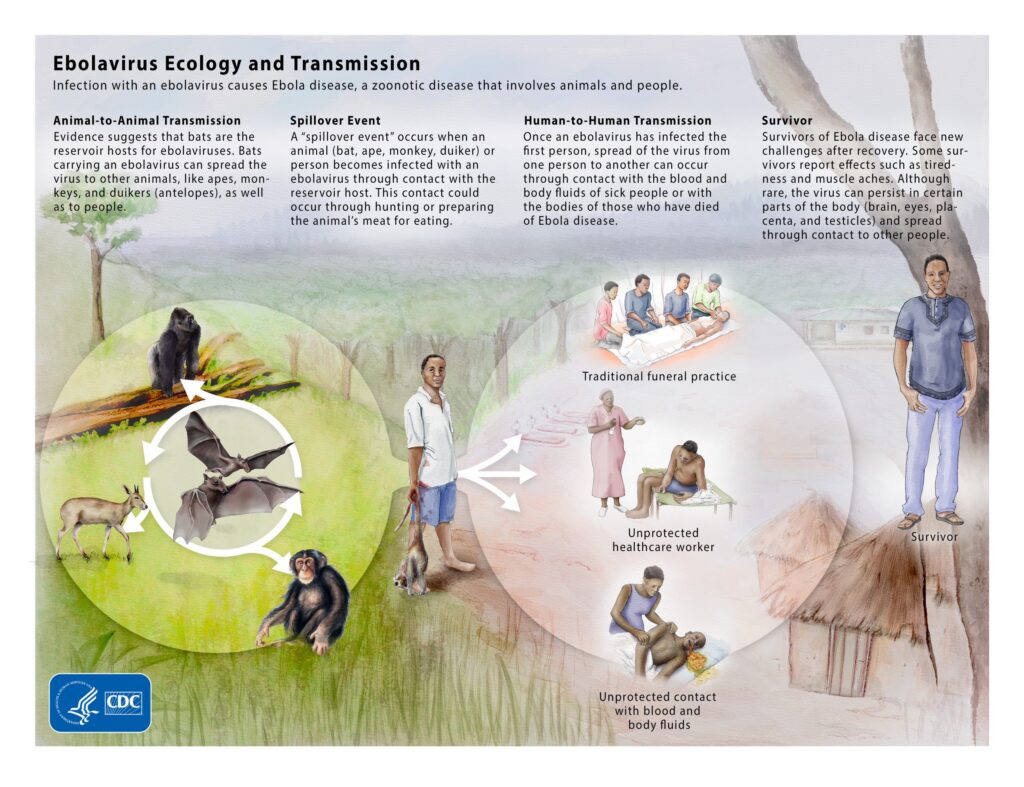
- Ebola is spread through contact with bodily fluids (i.e., blood, urine, feces, saliva, vomit, breast milk, amniotic fluid, semen, vaginal fluid) of an infected sick or dead person and/or through objects contaminated with bodily fluids (such as clothing, bedding, needles, or medical equipment).
- Some people can get the disease from direct contact with an infected animal, such as a bat, forest antelope, or non-human primate.
- Direct contact with animals includes hunting, handling or eating infected animals.
- Healthcare providers and family members caring for someone with Ebola without proper infection control precautions such as putting on and taking off personal protective equipment (i.e., covering all exposed skin with an impermeable or fluid-resistant gown, N-95 mask or higher, gloves, and boot covers) correctly are at the highest risk of infection.
- Sexual transmission is believed to be rare but can occur as the virus can persist in semen months after recovery.
- A person is only contagious once they start showing symptoms of the disease.
- A person cannot get Ebola from simply being near someone or passing them in public spaces because it doesn’t spread through the air.
Signs and Symptoms
On average, symptoms begin about 8 to 10 days after infection/exposure. However, someone with Ebola may start to feel sick as soon as 2 days to as late as 21 days after exposure. This is why public health authorities monitor people who have been potentially exposed to Ebola virus for 21 days.
Ebola symptoms include:
- Early “Dry” symptoms (Initial symptoms)
- Fever
- Aches and pains in muscles or joints
- Headache
- Weakness and fatigue
- Loss of appetite
- Later “Wet” symptoms (4 to 5 days after initial symptoms)
- Unexplained bleeding
- Gastrointestinal symptoms such as:
- Nausea
- Vomiting
- Diarrhea
- Abdominal Pain
- Additional symptoms can include chest pain, shortness of breath, confusion, red eyes, skin rash, hiccups or seizures.
Symptoms of Ebola disease can be hard to distinguish from other infectious diseases such as malaria, influenza, typhoid fever, or meningococcal disease.
Geography and History
Ebola is primarily found in sub-Saharan Africa. It was first identified in 1976 after an outbreak in the Democratic Republic of the Congo. Please refer to the history of Ebola outbreaks CDC webpage for a current summary. The Ebola virus, Sudan virus, and Bundibugyo virus are responsible for the largest outbreaks in Africa.
Prevention
People that live in or are traveling to regions where Ebola disease has been diagnosed or suspected can do the following to reduce the risk of becoming infected with Ebola virus:.
- AVOID contact with the following:
- Body fluids such as blood, urine, feces, saliva, sweat, vomit, breast milk, amniotic fluid, semen, and vaginal fluid from people who are sick.
- Semen from someone who has recovered from Ebola disease until testing shows that the virus is no longer in the semen.
- Clothing, bedding, needles, medical equipment, or items that may have touched an infected person’s blood or body fluids.
- Body of someone who is suspected or confirmed to have Ebola disease as part of a funeral or burial ceremony.
- Bats, forest antelopes, primates, and blood, fluids, or raw meat from these or unknown animals.
- Check CDC Travel Alerts/Yellow Book before travel to understand which countries are affected and recommended health precautions to stay safe while traveling.
Treatment
Currently there are 2 treatments and 1 vaccine approved by the U.S. Food and Drug Administration (FDA) for Ebola disease caused by the Ebola virus.
- Treatments:
- Inmazeb® – combination of 3 monoclonal antibodies
- Ebanga®- single monoclonal antibody
- Vaccine:
- ERVEBO® vaccine
There are currently no FDA-approved treatments or vaccines for the other three orthoebolaviruses that affect humans (Sudan virus, Taï Forest virus, and Bundibugyo virus). Potential therapeutic options are under investigation.
Supportive care remains the focus for patients with all forms of Ebola disease. Recommended care includes:
- Blood pressure maintenance
- Pain and fever control
- Nutritional support
- Intravenous fluids to correct dehydration from vomiting and diarrhea
- Treatment of secondary bacterial infections and pre-existing conditions
Information for the Public
For people returning from an Ebola-affected area:
- After you leave the affected area, it is important to monitor your health over the next 21 days and have contact with your local health authority.
- Watch for any signs and symptoms consistent with Ebola
- If you believe that you have Ebola symptoms, isolate yourself from other people immediately and call your Local Health Authority for advice about medical care.
- If you don’t live in Nevada, you can find 24/7 contact information for the health departments in other states here
- If you need urgent medical care or cannot reach your local health authority, call your healthcare provider, tell them your symptoms and that you were recently in a country with risk of Ebola. That will help them prepare their staff with the right protective equipment and get ready for your arrival.
Information for Providers and Healthcare Facilities
- Screening and Evaluating an Ill Person for Viral Hemorrhagic Fevers | CDC
- Guidance for Personal Protective Equipment | CDC
- Poster: Ambulatory Care Evaluation of Patients with Possible Ebola | Ebola | CDC
- Ebola Health Facility Door Sign | Ebola | CDC
- Think Ebola Factsheet
Reporting
For information on how to report a disease click here. For any questions, please contact the appropriate health authority by phone or review the website for additional information.
Carson City, Douglas and Lyon Counties
Carson City Health & Human Services (CCHHS)
(775) 887-2190
Website
Churchill, Mineral, Eureka and Pershing Counties
Central Nevada Health District (CNHD)
(775) 866-7535
Website
Clark County
Southern Nevada Health District (SNHD)
(702) 759-1300
Website
Washoe County
Northern Nevada Public Health (NNPH)
(775) 328-2447
Website
All Other Counties
Nevada Division of Public and Behavioral Health (DPBH)
(775) 400-0333
Website