



Environmental Health
Recreational Water Illnesses
Recreational Water Illnesses in Nevada
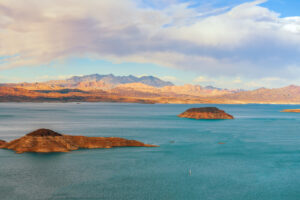
Although many people think of Nevada as a dry desert, it is a great state for people who enjoy water recreation activities. Nevada has many lakes, streams, reservoirs, hot springs, spas, swimming pools and water parks for people to enjoy.
Playing in the water – whether swimming, boating or diving can be fun, but it can also be dangerous, especially for children. Knowing how to stay safe can help prevent injuries and drowning. To stay safe in the water:
- Avoid alcohol when swimming or boating
- Wear a life jacket whenever you’re in a boat
- Don’t swim alone, or in bad weather
- Learn CPR
- Learn to swim and teach your children to swim
- Supervise your children when they are in the water
- Prevent sunburns – use plenty of sunscreen
People should also be aware of potential illnesses that can be spread through water recreation activities such as swimming, boating, diving, or rafting. Recreational water illnesses typically affect a person’s stomach and intestines, skin, or respiratory system.
If you think you have a recreational water illness that needs medical attention, contact your health care provider. Report suspected recreational water illnesses to your local health department immediately. Health care providers and hospitals are required to report water borne communicable diseases and suspect waterborne disease outbreaks.
- Carson City Health and Human Services (Carson City, Douglas and Lyon Counties) 775-887-2190 (24 hours)
- Central Nevada Health District (Churchill, Mineral, Eureka, and Pershing Counties) 775-866-7535 (24 hours)
- Southern Nevada Health District (Clark County) 775-759-1300 (24 hours)
- Northern Nevada Public Health (Washoe County) 775-328-2447 (24 hours)
- Nevada Division of Public and Behavioral Health (all other Nevada Counties) 775-684-5911 (Monday – Friday 8am to 5pm) and 775-400-0333 (after hours)
Naegleria fowleri
What is Naegleria fowleri?
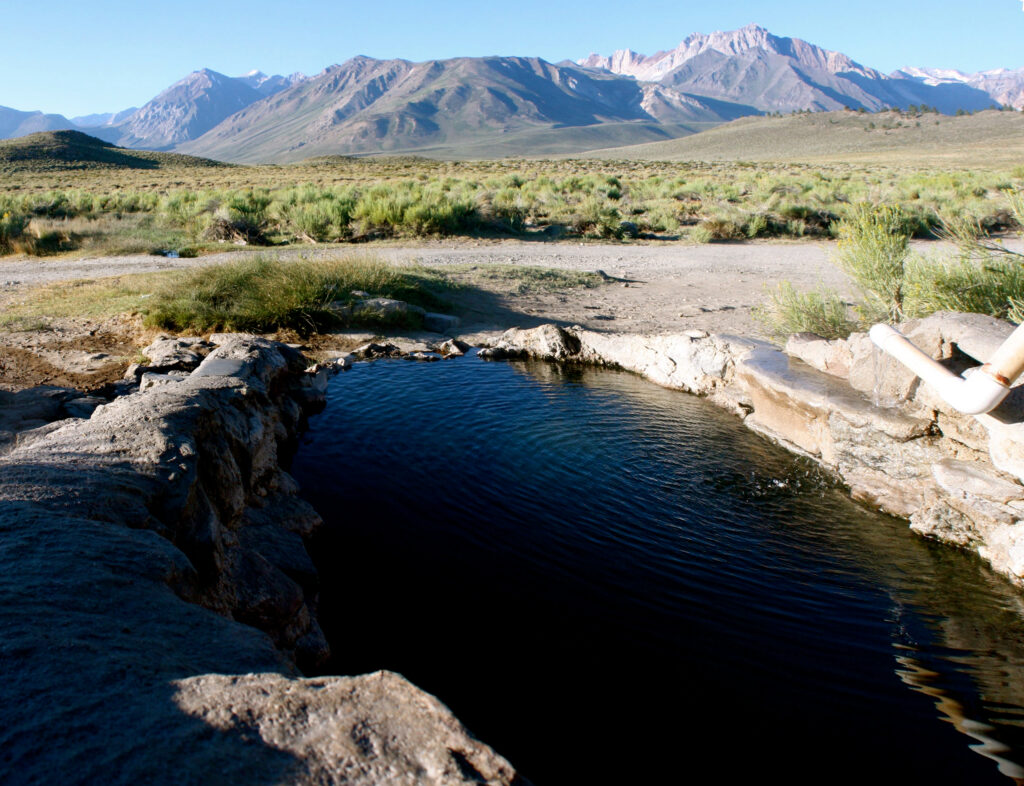
Naegleria fowleri is an ameba that is found in warm fresh water such as lakes, rivers and hot springs. The amebae are more likely to live in sediment at the bottom of lakes, ponds, and rivers, therefore people should avoid digging in, or stirring up the sediment in shallow, warm fresh water. Naegleria fowleri infects people when water containing the ameba enters the nose when people go swimming, diving, or when they put their heads under fresh water in lakes, rivers, or hot springs. The ameba then travels up the nose to the brain, where it destroys the brain tissue and causes an infection called Primary Amebic Meningoencephalitis (PAM). PAM is almost always fatal. Naegleria fowleri infections may also happen when people use contaminated tap water to cleanse their noses and in very rare instances, people have gotten Naegleria fowleri infections from recreational water that didn’t have enough chlorine in it, such as pools, splash pads, or surf parks. People cannot be infected with Naegleria fowleri by drinking contaminated water.
Where is Naegleria fowleri found?
Naegleria fowleri may be present in any freshwater body in the United States, regardless of the state, especially during the warmer months of July, August, and September. It is a heat-loving organism that grows best at high temperatures up to 115°F and can survive for short periods at even higher temperatures. Scientists have tested water temperatures from lakes and rivers linked to some PAM cases, and the temperatures have usually been higher than 80°F. However, it is possible that the ameba may live in water with a temperature below 80°F and it can be found in lake or river sediment at temperatures well below where one would find the ameba in the water.
The ameba can be found in:
- Warm fresh water, such as lakes and rivers
- Geothermal (naturally hot) water, such as hot springs
- Warm water discharge from industrial or power plants
- Untreated geothermal (naturally hot) drinking water sources
- Swimming pools, splash pads, surf parks, or other recreational venues that are poorly maintained or don’t have enough chlorine in them
- Tap water
- Water heaters
- Soil, including sediment at the bottom of lakes, ponds, and rivers
Naegleria fowleri is not found in salt water, like the ocean.
How common are Naegleria fowleri infections in the United States?
Naegleria fowleri causes PAM, a brain infection that destroys brain tissue. Naegleria fowleri infections are rare. Between 2013 and 2022 a total of 29 infections were reported in the United States despite millions of recreational water exposures each year. Because PAM is so rare, and the infection progresses so quickly, effective treatments have been challenging to identify.
What are the symptoms of Naegleria fowleri infection?
In its early stages, symptoms of PAM usually start about 5 days after infection, but they can start within 1 to 12 days. Symptoms may be similar to symptoms of bacterial meningitis and may include:
- Headache
- Fever
- Nausea
- Vomiting
Later symptoms can include:
- Stiff neck
- Confusion
- Lack of attention to people and surroundings
- Seizures
- Hallucinations
- Coma
After symptoms start, the disease progresses rapidly destroying brain tissue and causing brain swelling which usually results in death within about 5 days (but death can happen within 1 to 18 days).
People should seek medical care immediately whenever they develop a sudden onset of fever, headache, vomiting, or stiff neck, particularly if they have been in warm fresh water recently.
Is there a routine rapid water test for Naegleria fowleri?
There isn’t a test that can be done quickly. It can take weeks to perform an environmental investigation and identify the ameba in water. Naegleria fowleri is naturally occurring in fresh water and previous water testing has shown that Naegleria fowleri is commonly found in freshwater bodies. Though the risk is low, recreational water users should always assume there is a risk for infection whenever entering warm fresh water.
What swimming behaviors have been associated with Naegleria fowleri infection?
Behaviors associated with the infection include diving or jumping into the water, putting the head under water, or engaging in other activities that cause water to go up the nose. Since the amebae are more likely to live in the sediment at the bottom of lakes, ponds, or rivers, swimmers should also avoid digging or stirring up the sediment.
If you choose to swim, you can reduce your risk of infection by trying to prevent water from going up your nose.
- Avoid jumping or diving into bodies of warm fresh water, especially during the summer.
- Hold your nose shut, use nose clips, or keep your head above water when in bodies of warm fresh water.
- Avoid putting your head under water in hot springs and other untreated geothermal waters.
- Avoid digging in, or stirring up, the sediment in shallow, warm fresh water.
For more information about Naegleria fowleri, click here

Stomach and Intestinal Illness
Gastrointestinal illnesses affect a person’s stomach and intestines, and can cause diarrhea, nausea, or vomiting. The following gastrointestinal illnesses have been associated with recreational water activities.
Cryptosporidium (Crypto)
Crypto has become one of the most common causes of water recreation diarrhea illness in the United States. The germ is found in animal’s and people’s stool (poop). It’s highly resistant to chlorine disinfection and can survive in a pool for as long as ten days. Swallowing contaminated recreational water (such as water from lakes, rivers, pools, or hot tubs) is how people are often infected. To help stop the spread of Crypto, people with diarrhea shouldn’t go swimming until two weeks after their diarrhea has completely stopped. To learn more about Crypto, click here.
Giardia
Giardia is another common cause of diarrhea and is found in the stool (poop) of infected people or animals. It can take about 45 minutes for this germ to be killed by chlorine disinfection in pools. If you have diarrhea, you should wait at least two weeks after the diarrhea has completely stopped to go swimming. The most common way people get sick from giardia is by swallowing contaminated drinking water or recreational water (for example, lakes, rivers, or pools). To learn more about Giardia, click here.
Shigella
Shigella causes severe diarrhea, which is often bloody. It can spread if an infected person or animal with diarrhea swims or plays in bodies of water such as lakes, beaches, rivers, or inadequately disinfected pools. A healthy person can then get sick from the contaminated water. Having hand washing stations with soap and disposable towels near swimming areas can help reduce the chances of the water becoming contaminated. Daycare centers should not provide water play areas to reduce the potential spread of shigella. To learn more about Shigella, click here.
E. coli O157:H7
People can get an E. coli infection by accidentally swallowing contaminated recreational water such as lake water while swimming. Symptoms are similar to Shigella and include severe diarrhea and bloody stool (poop). This infection can also be life-threatening and cause permanent damage to the kidneys. Swimming in inadequately disinfected pools or contaminated lakes or streams are potential sources of infection. Having hand washing stations with soap and disposable towels near swimming areas can help reduce the chances of the water becoming contaminated. To learn more about E. coli, click here.
Norovirus
Norovirus is very contagious and can spread through an infected person’s stool (poop) or vomit. The illness often begins suddenly and usually includes nausea, vomiting, diarrhea, and stomach cramps. Chlorine disinfection helps kill this virus in pools, but lakes and beaches can be contaminated. Avoid swallowing recreational water while swimming to help prevent infection. Having hand washing stations with soap and disposable towels near swimming areas can help reduce the chances of the water becoming contaminated. To learn more about Norovirus, click here.
Tips to prevent stomach and intestinal illnesses while swimming or playing in the water:
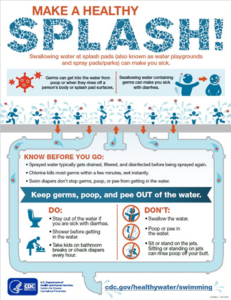
- Stay out of the water if you are sick with diarrhea
- If you or your child has had diarrhea, wait at least two weeks after the diarrhea has completely stopped to go swimming.
- If you or your child has been diagnosed with Crypto, don’t go back into the water until two weeks after your diarrhea has completely stopped.
- Don’t poop in the water.
- Take at least a one minute shower with soap and water before entering pools, splash pads or hot tubs. This helps remove most of the dirt, sweat, and oils on your body that use up the pool chemicals needed to kill germs.
- Don’t swallow recreational water from pools, lakes, rivers, or hot tubs.
- Take kids on bathroom breaks and check diapers every hour in a diaper changing area if possible.
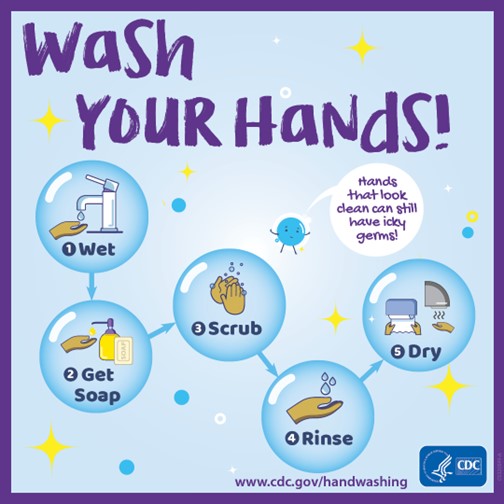
- Change diapers away from the water to help keep germs out of the water. Always wash your hands with soap and water and dry with disposable towels after using the bathroom or changing diapers.
- For more information on how to stay healthy while swimming or enjoying water recreation activities, click here.
Skin Irritations
Skin rashes, boils, allergic reactions to chemicals, and skin damage from the sun can occur when enjoying water recreation activities.
Hot Tub Rash – Pseudomonasdermatitis / Folliculitis
Hot Tub Rash or dermatitis is an infection that causes an itchy bumpy rash on the skin. The rash usually occurs within days of swimming in poorly maintained hot tubs or spas but can also be spread by swimming in a contaminated pool or lake. Properly maintaining hot tubs and pools helps eliminate the germ that causes this rash. To learn more about Hot Tub Rash, click here.
Swimmer’s Itch – Cercarial dermatitis
Swimmer’s itch is a rash caused by an allergic reaction to parasites that typically infect some birds and mammals. The parasites come from infected snails which live in lakes and ponds. The parasites are released from snails and typically burrow in mammals or birds. However, people become infected by the parasite. People are not suitable hosts for the parasite’s life cycle, so after burrowing into a swimmer’s skin, the parasite soon dies. Reduce your risk of illness by not swimming in areas known to have a swimmer’s itch problem or where snails are commonly found. Also, showering or towel drying immediately after leaving the water can help reduce exposure to the parasite. For more tips on reducing the risk and treating swimmer’s itch, click here.
Cyanobacteria – Blue-green Algae – Harmful Algal Bloom
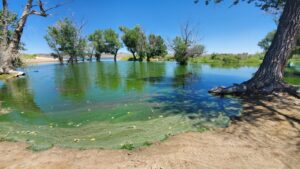
Cyanobacteria, also called harmful algal blooms or blue-green algae, are found in lakes, rivers, ponds, and seawater. Sometimes cyanobacteria are toxic, and people can experience skin, eye, or ear irritation with contact. If toxic cyanobacteria are swallowed, it can cause stomach cramps, vomiting, diarrhea, sore throat, fever, headache, muscle and joint pain, or nerve and liver damage. Avoid swimming in or having contact with algal blooms. Don’t let pets drink or swim in waters with algal blooms as it can be harmful to them. To learn more about Cyanobacteria and for active HAB reports in Nevada, click here.
Chemical Sensitivity
Some people can experience allergic reactions, such as skin redness and itching, to chemicals used in pools. The reactions commonly occur within an hour or two of being in the water. It’s also possible that improper use of chemicals or a chemical release at a pool could expose people to skin or respiratory irritants. To learn more information and tips about chemical sensitivity, click here.
Sun Exposure
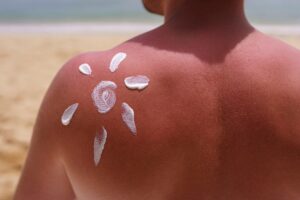
Sun exposure refers to the time spent in direct sunlight. Limiting sun exposure is important because too much can lead to sunburn and increases the risk of skin cancer. Additionally, excessive sun exposure may also raise the risk of heat-related illnesses, such as heat exhaustion and heat stroke. Practicing good sun safety, such as wearing sun-protective clothing and sunscreen, seeking shade, staying hydrated, and wearing hats and sunglasses, helps protect against these risks. To learn more information and tips about sun exposure, click here.
Respiratory Illness
Some water recreation illnesses can affect a person’s breathing causing cold or flu-like symptoms, shortness of breath, cough, or a serious infection in the windpipe or lungs. Other serious infections can occur if certain organisms enter the nasal passage and travel to the brain.
Legionellosis
Legionnaires’ disease is a serious infection that creates life threatening pneumonia. Another less serious form of the infection is called Pontiac fever, which has the same early symptoms of Legionnaires’ disease (body pain, weakness, headache, fever, chills, and cough) but isn’t associated with pneumonia or death. The germ that causes the disease can be found in streams, ponds or in man-made structures such as fountains, spas, cooling towers, and plumbing systems. People are typically infected by breathing in contaminated water vapor or steam. Proper maintenance of pools, spas and water systems helps eliminate this germ. To learn more about Legionellosis, click here.
Mycobacterium avium & endotoxins
Water vapor or steam contaminated with bacteria or bacterial fragments can be breathed in causing an allergic reaction and inflammation in the lungs. This condition is called “hypersensitivity pneumonitis”, is rare but has been associated with spas or indoor pools that have water features which produce vapors or mists. Water that is sitting in pipes and isn’t continuously disinfected can become a source of bacterial fragments. Proper maintenance of pools and spas helps eliminate these germs. You can find more information at Cleveland Clinic and the American Lung Association.
Other Water Recreational Illnesses and Risks
Swimmer’s Ear – Otitis externa
Swimmer’s ear is an infection of the outer ear canal and can affect anyone but is most common in children. Symptoms usually start a few days after swimming and include ear pain, itchiness, redness, swelling, and pus draining from the infected ear. It can be treated with antibiotic ear drops. Swimmer’s ear is caused when water stays in the ear canal for long periods of time, allowing germs to grow and infect the skin. When swimming, try to keep ears dry by wearing a swimming cap, ear plugs or custom fitted swim molds. If water gets in your ear, tilt your head with ear facing down and gently pull your earlobe in different directions to help the water drain out. Learn more about Swimmer’s Ear here.
Drowning
Drowning occurs when a person’s nose and mouth is submersed in a liquid, causing a person not to be able to breath and the person suffocates. Drowning is the leading cause of death in children ages 1-4 and the second leading cause of unintentional death for children 5 to 14 years old. Drowning can happen to anyone, any time there is access to water. This includes pools and lakes, and also smaller water bodies like bathtubs and liquid-filled buckets.
Drowning is preventable. Follow these key prevention tips:
- Learn how to swim and teach children how to swim
- Supervise children closely and constantly when they are in or near water
- Properly fence home swimming pools
- Wear a properly fitted life jacket
For more information and tips on protection from drowning, click here.
Pool Safety video: Pool Safety | Drowning is Silent and Happens in Minutes | AAP – YouTube
For more tips about staying healthy while enjoying recreation waters visit the CDC Healthy Swimming site
Safe Water Use While Camping, Hiking and Traveling
Safe Water Use With Recreational Vehicles (RVs)
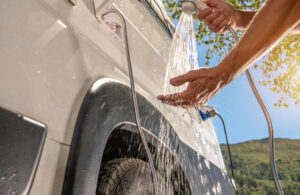
Germs can grow in all water systems, including in recreational vehicles (RVs). You can avoid these kinds of germs by making sure water coming into your RV is safe to drink, keeping your RV’s water system clean, and using water from your RV safely. For more information on safe RV water use click here.
Water Treatment while Hiking, Camping and Traveling
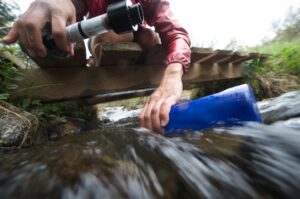
When visiting places with unknown water quality such as hiking or camping, water needs to be treated before consuming for safety. Boiling water is the most reliable way to kill germs. However, if you can’t boil your water, the next best option is to use a filter (especially if water is cloudy) and then use another treatment method. For a guide to help you determine what treatment methods or combination of methods is best to use to make your water safe to drink, click here.