



Ebola Situational Update
General Overview of Current Outbreak
An outbreak of Bundibugyo virus disease (BVD) is occurring in the Democratic Republic of Congo (DRC) and Uganda. BVD is a type of Ebola disease (a viral hemorrhagic fever [VHF]) caused by infection with the Bundibugyo virus. BVD is a serious and often deadly disease. No vaccines or specific treatments have been approved to prevent or treat BVD, but early supportive care improves the chance of survival and candidate vaccines and therapeutics are being evaluated. Health authorities in the affected countries are conducting investigations to identify infected people and their contacts to prevent further transmission and educate communities and the public about the risks of BVD and protective actions.
The Centers for Disease Control and Prevention (CDC) is working with international partners and the DRC and Uganda Ministries of Health. This is an evolving situation and as of June 1, 2026, there are no confirmed cases of Ebola disease in the United States due to this outbreak. The risk for the American public and travelers remains low.
Please visit Ebola Outbreak: Current Situation for most current map and up-to-date numbers of reported Ebola cases.
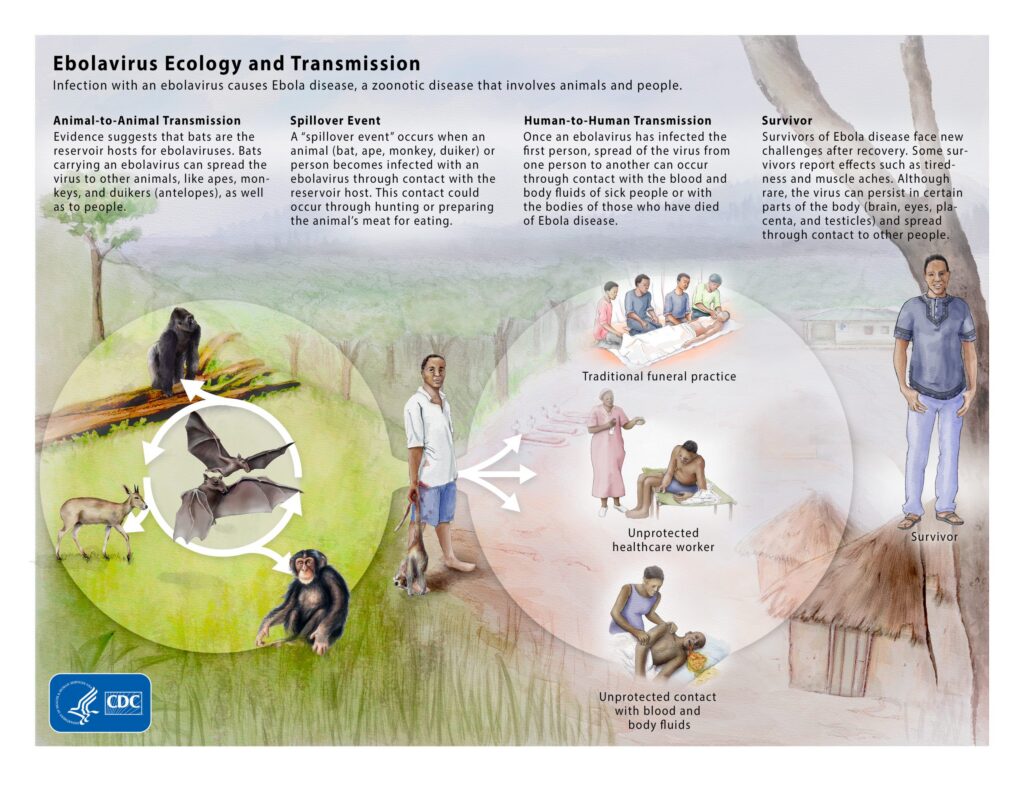
How Ebola Spreads
- Ebola is spread through contact with bodily fluids of an infected sick or dead person and/or through contaminated objects (such as clothing, bedding, needles, or medical equipment).
- Some people can get the disease from direct contact with an infected animal, such as a bat, forest antelope, or non-human primate.
- Direct contact with animals includes hunting, handling or eating infected animals.
- Healthcare providers and family members caring for someone with Ebola without proper infection control precautions are at the highest risk of infection.
- Sexual transmission is believed to be rare.
- A person is only contagious once they start showing symptoms of the disease.
- A person cannot get Ebola from simply being near someone or passing them in public spaces because it doesn’t spread through the air.
Prevention
Below are prevention tips for people that live in or are traveling to regions where Ebola disease has been diagnosed or suspected.
AVOID contact with the following:
- Body fluids such as blood, urine, feces, saliva, sweat, vomit, breast milk, amniotic fluid, semen, and vaginal fluid from people who are sick.
- Semen from someone who has recovered from Ebola disease until testing shows that the virus is no longer in the semen.
- Clothing, bedding, needles, medical equipment, or items that may have touched an infected person’s blood or body fluids.
- Body of someone who is suspected or confirmed to have Ebola disease as part of a funeral or burial ceremony.
- Bats, forest antelopes, primates, and blood, fluids, or raw meat from these or unknown animals.
When preparing to travel it is always a good idea to check for travel health notices pertaining to your destination(s). CDC publishes Travel Health Notices to inform travelers of health risks during travel.
Symptoms
On average, symptoms begin about 8 to 10 days after infection/exposure. However, someone with Ebola may start to feel sick 2 to 21 days after exposure.
Ebola symptoms include:
- Early “Dry” symptoms (Initial symptoms)
- Fever
- Aches and pains in muscles or joints
- Headache
- Weakness and fatigue
- Loss of appetite
- Later “Wet” symptoms (4 to 5 days after initial symptoms)
- Unexplained bleeding
- Gastrointestinal symptoms such as:
- Nausea
- Vomiting
- Diarrhea
- Abdominal Pain
- Additional symptoms can include chest pain, shortness of breath, confusion, red eyes, skin rash, hiccups or seizures.
Symptoms of Ebola disease can be hard to distinguish from other infectious diseases such as malaria, influenza, typhoid fever, or meningococcal disease.
Monitor your health after traveling
If you are returning from an affected country but had no high-risk exposures to Ebola virus, you can take 3 steps to monitor your health for 21 days after you leave the affected country and minimize the risk of spreading disease to others if you do get sick.
- Watch for any symptoms consistent with Ebola while there and for 21 days after you leave the country.
- If you traveled to an area of concern, take your temperature everyday and again if you feel sick.
- If you were in one of these affected countries, but not in the area of concern, take your temperature if you feel sick.
- If your local health authority wants to check in with you regularly to monitor your symptoms, respond to their calls or text messages and ask them any questions you might have.
- If you develop any symptoms consistent with Ebola, stay away from others and immediately contact your local health authority. They will help you coordinate what to do next.
If you had high-risk exposures to Ebola virus in an affected country, your local health department will work with you to monitor your health for 21 days.
Resources for public health departments and clinicians:
- https://www.cdc.gov/ebola/hcp/clinical-guidance/index.html
- https://www.cdc.gov/ebola/php/emergency-guidance/index.html
- https://www.cdc.gov/ebola/php/public-health-strategy/index.html
- Ambulatory Care Evaluation of Patients with Possible Ebola Disease (Ebola) | CDC
- Ebola Health Facility Door Sign | CDC