


Plague is a zoonotic disease, meaning it can spread between animals and humans. It can affect both humans and mammals – primarily rodents such as rats, voles, ground squirrels, prairie dogs or chipmunks, and fleas from an infected animal. There are three major forms/clinical syndromes (Bubonic Plague, Septicemic Plague, and Pneumonic Plague) and individuals can progress from one clinical syndrome to another.
Signs and Symptoms
Signs and symptoms vary depending on how the individual was infected.
Bubonic Plague– accounts for 80-95% of cases and is primarily transmitted from the bite of an infected flea. Symptoms include sudden onset of fever, chills, weakness, and headache, followed by intense pain and swelling in a lymph node-bearing area (bubo). If not treated, the bacteria can spread to other parts of the body.
Septicemic Plague – accounts for 10-20% of cases. Individuals develop fever, chills, extreme weakness, abdominal pain, shock and possibly bleeding into the skin and other organs. Skin and other tissues may turn black and die, especially on the fingers, toes and nose. It can be the first symptom of plague or develop from untreated bubonic plague.
Pneumonic Plague –is rare and is categorized into primary or secondary (see below). Individuals typically present with shortness of breath (dyspnea), high fever, chest pain and a cough that may be accompanied by characteristic blood sputum. This is the most serious form of the disease and is the only form of plague that can spread person-to-person. It is rapidly fatal unless appropriate treatment is started.
- Primary – Acquired through inhalation of respiratory secretions or aerosolized droplets from infected animals, humans or laboratory exposure.
- Secondary – More common and is due to spread of bacteria from a bubo or other source.
How it Spreads
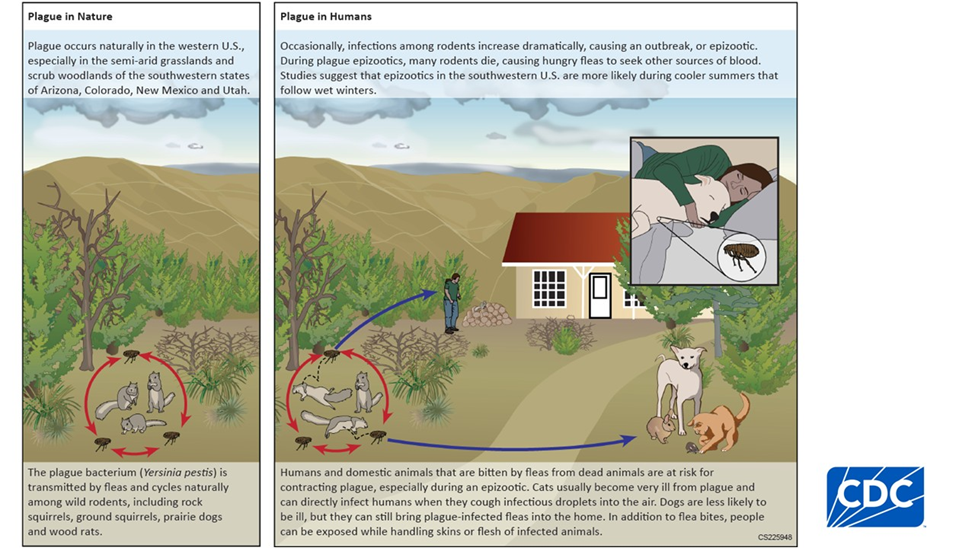
The bacterium that causes plague, Yersinia pestis, is primarily transmitted by fleas. Person-to-person transmission can occur when a person has pneumonic plague but has not been documented in the United States (U.S.) since 1924.
Plague bacteria can be transmitted to humans via:
Flea bites – These are the most common form of transmission. During plague epizootics (large, sudden disease outbreaks in animals), many rodents die and fleas seek other sources of blood. Humans and animals visiting places where rodents have recently died due to the plague are at risk of being infected from flea bites. Dogs and cats can also bring plague-infected fleas into the home. According to the American Veterinary Medical Association, severe plague disease is often seen in wild rodents like prairie dogs, chipmunks, and squirrels. Less often, it surfaces in wild rabbits (especially cottontails), pet cats, and, rarely, people. Although pet dogs can also catch plague or plague-carrying fleas, they are more resistant to getting sick. Flea bites usually result in bubonic or septicemic plague.
Contact with contaminated fluid or tissue – Humans can become infected by handling tissue or body fluids of a plague-infected animal without proper precautions like gloves. This exposure commonly results in bubonic or septicemic plague.
Infectious droplets – When humans and animals with pneumonic plague cough, they can release bacteria-containing droplets into the air that can infect another person if inhaled. Although rare, there have been pneumonic plague cases in humans exposed to sick cats. Cats can become infected by eating infected rodents and have a risk of transmitting infectious plague droplets to their owners or to veterinarians.
Geography and cases in the U.S.
Plague was first introduced to the U.S. in 1900 from rat-infested steamships from affected areas. The last urban plague epidemic in the U.S. occurred in Los Angeles from 1924-1925. Most human cases in the U.S. are acquired from two regions:
- Northern New Mexico, northern Arizona, and southern Colorado
- California, southern Oregon, and far western Nevada
Over 80% of U.S. plague cases have been the bubonic form. In recent decades, an average of 5 human plague cases has been reported each year (range: 0-17 cases per year). Although the threat of a bioterrorist attack using Y. pestis, the germ that causes plague, is unlikely, there are examples throughout history of Y. pestis being used as a bioweapon. If such an emergency were to occur in the U.S., the Centers for Disease Control and Prevention (CDC) and other federal agencies would work closely with state and local partners to coordinate a response. They keep a stockpile of antibiotics as a precaution.
Prevention Tips
- Reduce rodent habitat around your home, workplace, and recreational areas. Remove brush, rock piles, junk, cluttered firewood, and possible rodent food supplies, such as pet and wild animal food. Rodent-proof your home and outbuildings.
- Wear gloves if you are handling or skinning potentially infected animals to prevent contact between your skin and any plague bacteria. Contact your local health authority (contact information for the local health authorities in Nevada is below) if you have questions about disposal of dead animals.
- To prevent flea bites, use Environmental Protection Agency (EPA)-registered insect repellents containing DEET, picaridin, IR3535, Oil of Lemon Eucalyptus (OLE), para-menthane-diol (PMD), or 2-undecanone. Look for an EPA registration number (EPA Reg. No.) on the insect repellent product label. This registration number means the company provided EPA with technical information on the effectiveness of the product. When used as directed, EPA-registered insect repellents are proven safe and effective, even for pregnant and breastfeeding women.
- Keep fleas off of your pets by applying flea control products. Animals that roam freely are more likely to come in contact with plague infected animals or fleas and could bring them into homes. If your pet becomes sick, seek care from a veterinarian as soon as possible.
- Do not allow dogs or cats that roam free in endemic areas to sleep on your bed.
- Post-exposure prophylaxis is indicated for people with known exposure to plague. If you believe you may have been exposed to a plague-infected animal or person, please consult with a medical provider.
Note: A plague vaccine is no longer available in the U.S. New plague vaccines are in development but are not expected to be commercially available in the immediate future.
Treatment
Antibiotic therapy can cure plague and improve health outcomes, but it’s important to give antibiotics promptly. Delayed antibiotic therapy has been associated with higher mortality. A healthcare provider’s approach to treatment selection depends on clinical syndrome, underlying health conditions and allergies.
Information for Providers and Healthcare facilities
Veterinary Guidance for Plague | CDC
Guidance for Responding to a Plague Bioterrorism Event | CDC
Plague Bioterrorism Response Toolkit | CDC
Reporting
For information on how to report a disease click here. For any questions, please contact the appropriate health authority by phone or review the website for additional information.
Carson City, Douglas and Lyon Counties
Carson City Health & Human Services (CCHHS)
(775) 887-2190
Website
Clark County
Southern Nevada Health District (SNHD)
(702) 759-1300
Website
Churchill, Mineral, Eureka and Pershing Counties
Central Nevada Health District (CNHD)
(775) 866-7535
Website
Washoe County
Northern Nevada Public Health (NNPH)
(775) 328-2447
Website
All Other Counties
Nevada Division of Public and Behavioral Health (DPBH)
(775) 400-0333
Website