



Wildfires and Smoke in Northern Nevada
Last Updated 9/2/2026
Wildfires and smoke continue to affect parts of Northern Nevada. The Bug Fire and Stallion Fire remain active but are now largely controlled. A new wildfire the Hawk Fire — which began on August 22 — is mostly controlled and no longer spreading. While these fires are not currently growing, they have recently caused evacuation notices, road closures, and periods of poor air quality across the community. Resources for wildfire preparedness, safety, and air quality information are available below.
For the most current information and resources, please visit: https://www.oem.nv.gov/wildfire-info-2026/
Resources for Hawk, Bug, & Stallion Fire Updates and Evacuees
Evacuation Maps
Local Incident Updates
Local Social Media Platforms providing updates including evacuation notifications on X, Facebook, and Instagram:
- Washoe County (@washoecountynv)
- City of Reno (@cityofreno)
- Reno Fire Department (@RenoFireDept)
- Stay Local Reno (@staylocal.reno)
- Truckee Meadows Fire and Rescue (@TMFPD)
Nevada Department of Emergency Management
Road closures, power outage information, and statewide emergency updates:
Updated Fire Size, Containment and Behavior
- Nvccd Bug Stallion Fire Information | InciWeb
- Nvccd Fred Mt Information | InciWeb
- NVHTF Hawk Fire Information | InciWeb
Current Evacuation & Shelter Resources

Evacuations and Closures: While most evacuation areas have reopened, forest closures remain in effect while mop-up, suppression repair, and safety work continue. Roads, trails, and recreation areas within the closure remain closed, and violations may result in fines. Current evacuation and closure information is available on the Perimeter Map.
More information click here: https://emergencywashoe.com/updates/
Road Closures and Energy Outages
Road closures may impact travel in northwest Reno, Cold Springs, and nearby areas. For the most current list of closures, please check the Perimeter Map: https://perimetermap.com/data/142-162943-polygon/
Power outages may also occur in areas affected by fire or heavy smoke. For current outage information and preparedness tips, visit: https://maps.nvenergy.com/outagemap/index.html
School Resources

See links below for Washoe County School Hawk Fire Recovery Resources.
- Hawk Fire Recovery Resources – Washoe County School District
- https://resources.finalsite.net/images/v1787521082/washoeschoolsnet/aypjb3kpx805yodotgdw/WCSDHawkFireResources.pdf
Food Replacement Options for Hawk Fire- Affected Residents
If you’ve been impacted by the Hawk Fire and lost food due to evacuations or fire-related power outages, several organizations are providing food replacement and emergency meals.
- Catholic Charities of Northern Nevada – Downtown Client Choice Food Pantry and Essentials Closet
- Location: 435 Eureka Ave, Reno, NV
- Regular Hours: Mon-Fri, 9am-noon & 1pm – 3pm.
- Extended Hours: Wed & Thurs, Aug 26-27, 3pm – 5pm.
- Helps Replace: Dairy, juice, fresh fruit/vegetables, meat, frozen meals, plus pantry staples and household essentials.
- Requirements: Bring ID or proof of residence in an impacted area.
- Location: 435 Eureka Ave, Reno, NV
- Red Cross – Reno Sparks Convention Center Evacuation Shelter
- Location: 4590 E. Peckham Lane, Reno
- Meals Available: No need to stay overnight; anyone affected can visit for meals and other assistance.
- Encouragement: Register with the Red Cross to help track needs.
- Location: 4590 E. Peckham Lane, Reno
- Food Bank of Northern Nevada
- Help: Daily food distribution locations via their program calendar.
- SNAP Recipients
- Food loss reporting: Contact your local Division of Social Services or call 775-684-7200 to report food loss from the August 2026 wildfires or power outages.
Air Quality and Your Health
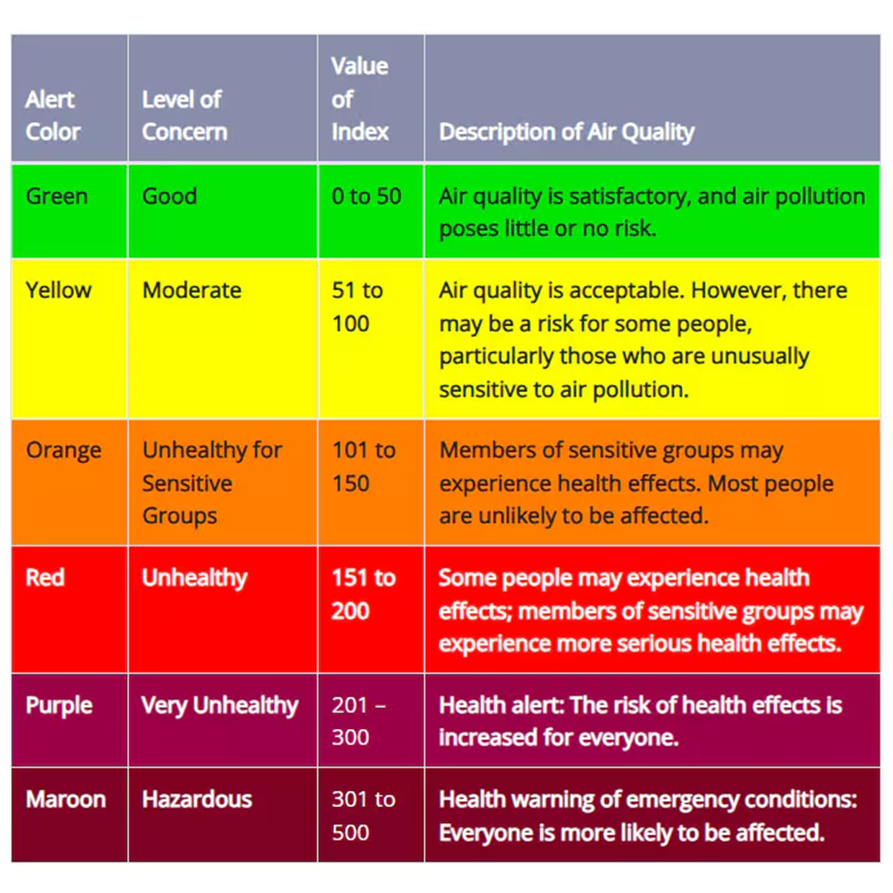
Wildfire smoke can irritate your eyes, nose, throat, and lungs and can make it harder to breathe. Children, older adults, people with asthma, COPD, heart disease, diabetes, or kidney disease; and pregnant people are especially at risk from smoke exposure.
To protect your health:
Check current air quality:
Checking the Air Quality Index (AQI) where you live at:
Limit smoke exposure:
- Keep windows and doors closed.
- Avoid burning candles or using gas/propane appliances indoors when possible.
- Use air purifiers or HVAC systems with clean filters.
- Plan outdoor activities based on air quality levels and avoid strenuous exercise when smoke is present or when air quality is poor.
Additional Resources for General Safety
- EPA – Reduce Your Smoke Exposure: https://www.epa.gov/wildfires/reduce-your-smoke-exposure
- CDC – Wildfires and Your Safety: https://www.cdc.gov/wildfires/about/
Pet and Livestock Safety
- CDC – Pet Safety Emergency Preparedness:
https://www.cdc.gov/healthy-pets/emergency-preparedness/index.html - EPA – Protect Pets from Smoke:
https://www.epa.gov/wildfires/protect-your-pets-wildfire-smoke - EPA – Protect Livestock and Large Animals:
https://www.epa.gov/wildfires/protect-your-large-animals-and-livestock-wildfire-smoke
Other Fire Health & Safety Information
The Office of State Epidemiology is recommending that everyone, regardless of where they live, have an emergency kit with a three-day supply of essential items. Store your supplies in waterproof containers that are easily accessible and transportable.
Recommended supplies in a basic emergency supply kit should include:
- Water: one gallon of water per person per day for drinking and sanitation
- Food: at least a three-day supply of non-perishable food
- Battery-powered radio and extra batteries
- Flashlight and extra batteries
- First aid kit including a three-day supply of prescription medications
- Whistle to signal for help
- Dust mask or cotton t-shirt to help filter the air
- Moist towelettes for sanitation
- Wrench or pliers to turn off utilities
- Can opener
- Plastic sheeting and duct tape to shelter-in-place
- Garbage bags and plastic ties for personal sanitation
- Sturdy shoes and extra clothing, coats and blankets
- Three-day supply of pet food
- Cash
- Unique or special needs (diapers, formula, medications, etc.)
Fire information to protect your personal health and safety
Frozen and Refrigerated Foods
Your refrigerator will keep foods cool for about 4 hours without power if the doors are not opened.
If your refrigerator or freezer is without power for a long period:
- Divide your frozen foods among friends if they have power;
- Seek freezer space in a store, church, school, or commercial freezer that has power; or
- Use dry ice (25 lbs of dry ice will keep a 10 cubic foot freezer below freezing for 3-4 days). Thawed food can usually be eaten if the food is 40 degrees Fahrenheit or colder or if it still contains ice crystals.
- Remember, “When in doubt, throw it out.” A wide variety of food borne illnesses can result from improperly stored and contaminated foods.
Other Hazards
Animals
Make a plan for where you will take your animals and pets if you are affected by a fire. Ensure there is food and water for them in your emergency supply kit. Many wild animals may be displaced due to fires as well as domesticated animals that will be forced into new environments. These displaced and disoriented animals can be dangerous. Do not corner an animal.
Chemical Hazards
Always use extreme caution when around chemicals and hazardous materials, especially during or after a fire. Fires may have exposed hazardous chemicals or created hazardous conditions. Items like propane tanks and car batteries can cause explosions, or electrical shock.